

Flossing 101: The Secret to Gum Health
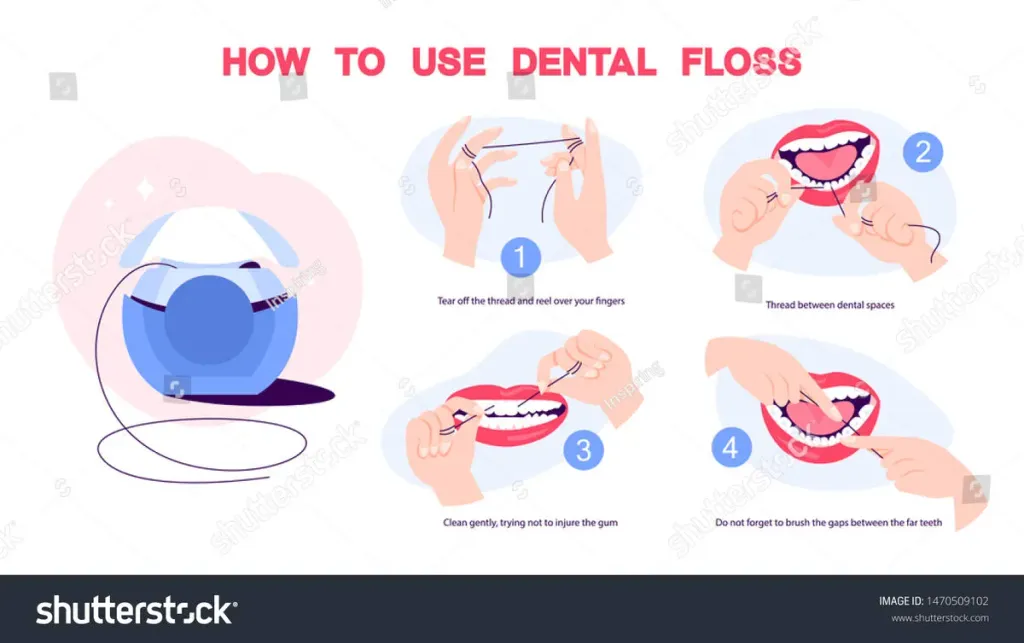
If you only brush, you are leaving about 40% of your tooth surfaces dirty. Flossing is the only way to remove plaque from between teeth where a brush simply cannot reach.
The "C-Shape" Technique
Many people just pop the floss in and out. To actually clean the tooth, you need to hug it. Here is the proper method:
1. Preparation
Cut off about 18 to 24 inches of floss. Wrap the ends around your middle fingers, leaving 1-2 inches of floss to work with. Grip it tightly between your thumbs and index fingers.
2. Gentle Insertion
Guide the floss gently between your teeth using a back-and-forth motion. Do not snap it into your gums, as this can cause injury.
3. The "C" Curve (Critical Step)
Once the floss is between teeth, curve it into a "C" shape against the side of one tooth. Slide it beneath the gumline and gently move it up and down. This rubs the plaque off the side of the tooth.
4. Repeat
Repeat this for the adjacent tooth, then move to the next space using a clean section of floss. Don't forget the back side of your very last molars!
Why Do My Gums Bleed?
If you aren't used to flossing, your gums may bleed at first. This is usually a sign of gingivitis (early gum disease), not an injury from the floss.
Dr. Gantayat's Advice: "Don't stop if you see blood! It means you need to floss more, not less. With daily flossing, the bleeding should stop within a week as your gums become healthy and strong."
Alternatives to String Floss
If you struggle with manual dexterity or have braces, implants, or bridges, a Water Flosser is an excellent alternative. It uses a pressurized stream of water to flush out debris and bacteria.
Bottom line: Brushing twice a day and flossing once daily (before bed) is the formula for a healthy smile that lasts a lifetime.
Related Topics:
Have Questions About Your Smile?
Our Temple team is happy to help — book online in under a minute, or give us a call.